
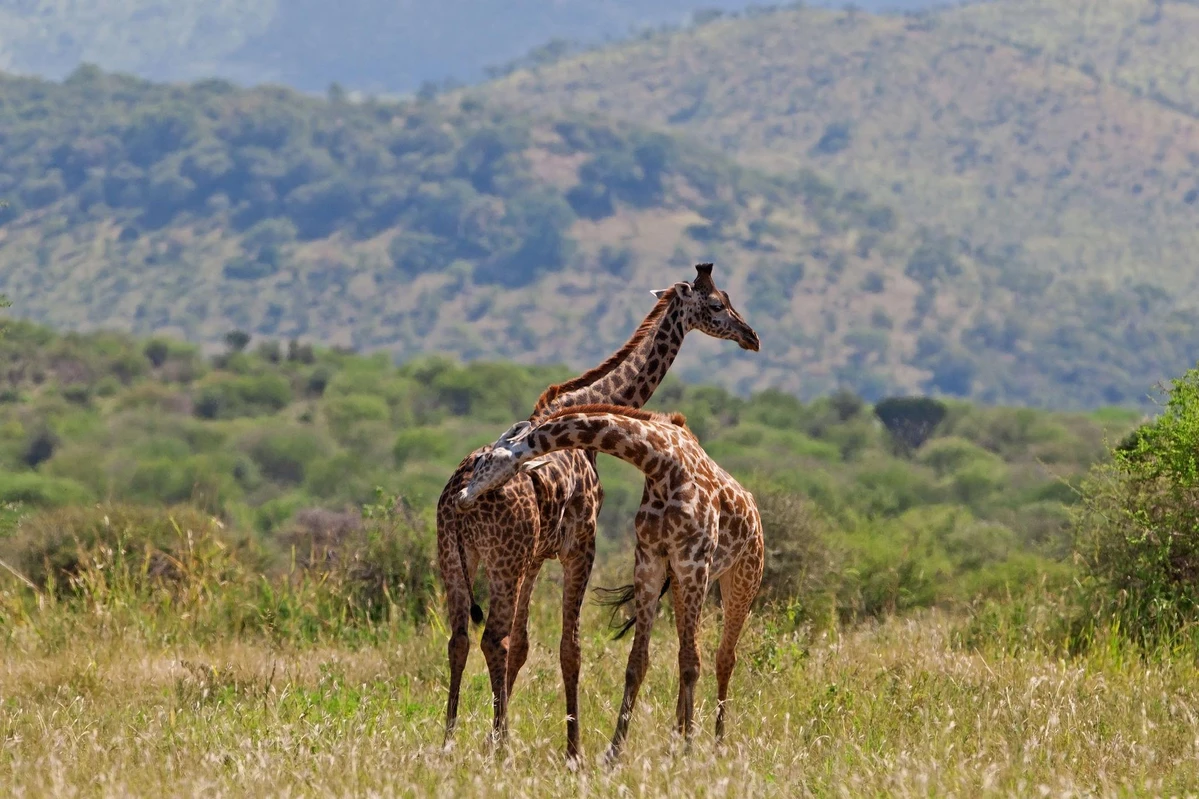
Destination
Tarangire National Park
Home to Africa's densest elephant herds and thousand-year-old baobabs along the Tarangire River.
Destination Overview
Tarangire National Park is a 2,850 km² (1,100 sq mi) wilderness in Tanzania's Manyara Region, about two hours by paved road south of Arusha on the country's northern safari circuit. Named after the Tarangire River that sustains its wildlife through the dry season, the area was first protected as a game reserve in 1969 and upgraded to full national park status on 30 October 1970, and has been managed by the Tanzania National Parks Authority (TANAPA) ever since. It sits within the wider Tarangire-Manyara ecosystem, an unfenced network of corridors linking Tarangire to Lake Manyara National Park and the surrounding Maasai steppe. The park has a warm, semi-arid climate with roughly 650–700mm of annual rainfall: a dry season from June to October brings daytime temperatures of 20–30°C (68–86°F) and the clearest game viewing, while the short and long rains between November and May bring greener scenery, fewer visitors, and daytime temperatures generally in the mid-20s Celsius (mid-70s to low-80s Fahrenheit).
Tarangire's baobab-studded plains and the Tarangire River, fed further south by the year-round Silale Swamp, make it one of the most reliable dry-season water sources on the northern circuit — which is why it draws some of the densest elephant herds in East Africa and has earned the nicknames "Land of Giants" and "Elephant Paradise." Beyond elephants, expect tree-climbing lions, leopards, cheetah, giraffe, and a dry-season "mini migration" of zebra and wildebeest, plus more than 550 recorded bird species and, unusually for the region, guided night game drives. The best time to visit Tarangire is the dry season (June–October) for peak wildlife concentration, though the wet season rewards visitors with lush landscapes and strong birdwatching. Most travelers reach the park by road from Arusha or Kilimanjaro International Airport, pairing it with the Serengeti, Ngorongoro Crater, and Lake Manyara, and can choose accommodation inside the park, on its boundary, or further afield near Lake Burunge.
Tarangire's Elephant Herds — the "Land of Giants"
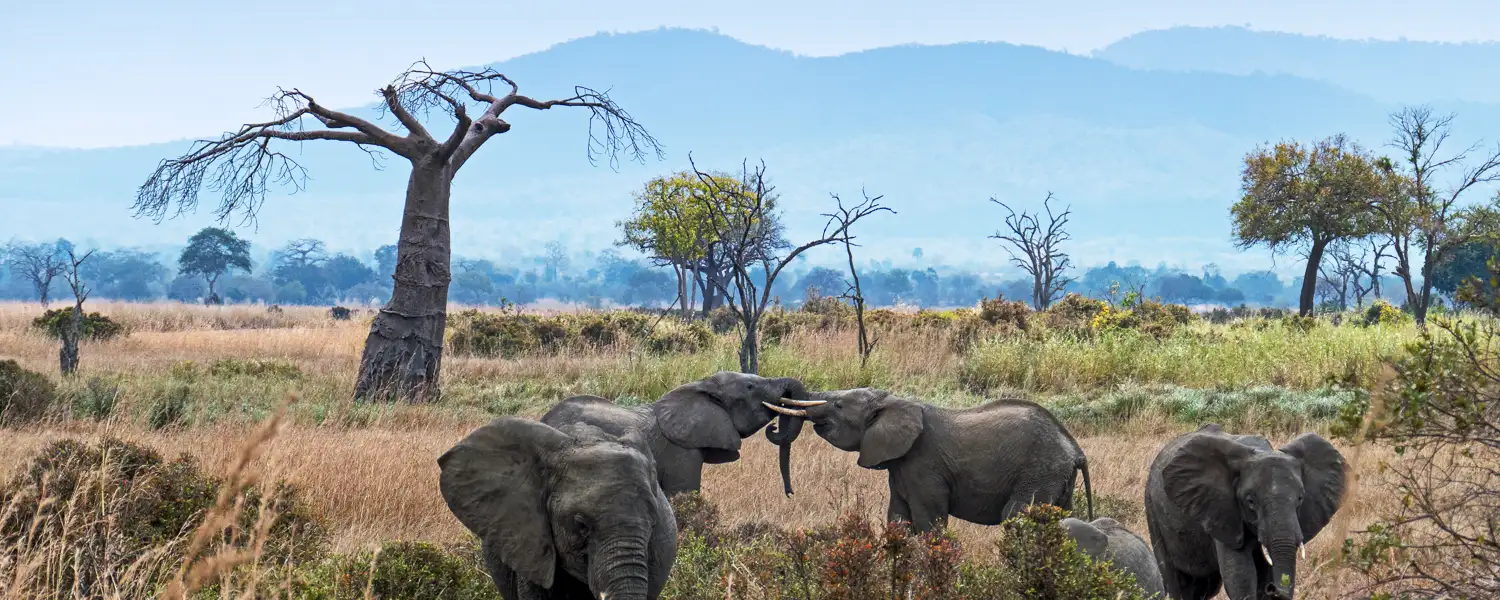
No Tarangire highlight is more famous than its elephants. The park is often nicknamed the "Land of Giants" for hosting one of the largest elephant concentrations in East Africa — during the dry season, resident and ranging herds can push past 3,000 individuals gathered along the Tarangire River. It's not unusual to watch a single herd of a hundred or more elephants, from matriarchs to calves, moving together to drink and bathe. The long-running Tarangire Elephant Project has tracked these family groups for decades, making Tarangire one of the best-studied elephant populations on the continent.
Ancient Baobab Trees, Some Over a Thousand Years Old
Tarangire's skyline is defined by its baobab trees — swollen, silver-barked giants that punctuate the grassland like natural sculptures. Some of the park's oldest baobabs are estimated to be more than a thousand years old, and they do far more than look striking: their trunks store water, their bark and fruit feed elephants, and their hollows shelter everything from bats to owls. The pairing of elephant herds moving beneath centuries-old baobabs is the single most photographed scene in Tarangire, and one of the most recognizable images of a Tanzania safari.
The Tarangire River and Silale Swamp
The Tarangire River is the park's lifeline, the only reliable water source for miles once the dry season sets in, and the reason so much wildlife funnels through the park between June and October. To the south, the Silale Swamp stays green even when the surrounding plains turn to dust, drawing elephants, buffalo, waterbuck, and dense flocks of storks and pelicans. Together, the river and swamp create Tarangire's two most productive game-viewing corridors — the places our guides prioritize on every dry-season drive.
Tree-Climbing Lions and Tarangire's Predators
Tarangire shares a quirky trait with nearby Lake Manyara: its lions are known to climb trees, often resting along the thick branches of sausage trees and acacias during the heat of the day. Leopards use the same tactic to keep their kills away from scavengers, while cheetahs hunt across the park's more open plains. Spotted hyena and the occasional wild dog round out a predator scene that's easy to underestimate next to Tarangire's famous elephants.
Tarangire's "Mini Migration"
Tarangire has its own lesser-known version of the Serengeti's Great Migration. As the dry season advances, thousands of zebra, wildebeest, and Cape buffalo stream in from the surrounding Maasai steppe to reach the Tarangire River, before dispersing back out across the ecosystem once the rains return. It's smaller in scale than the Serengeti spectacle, but it happens with far fewer vehicles around to watch it.
More Than 550 Bird Species
Recognized as an Important Bird Area, Tarangire is home to over 550 recorded bird species — one of the richest counts of any park in Tanzania. Highlights include the yellow-collared lovebird, found almost nowhere outside northern Tanzania, along with kori bustards, bateleur eagles, and, near the Silale Swamp, storks and pelicans in impressive numbers. Serious birders regularly rank a Tarangire highlight reel alongside — or above — the Serengeti's.
Night Game Drives — A Rare Experience in Tanzania
Unlike most parks on Tanzania's northern circuit, Tarangire permits night game drives, opening up an entirely different cast of wildlife. After dark, spotlights reveal nocturnal species rarely seen on a standard daytime safari: genets, civets, servals, and, with some luck, an aardvark or bushbaby. For travelers who've already done a few dry-season game drives elsewhere, a Tarangire night drive is one of the best ways to see something genuinely different.
Walking Safaris and Balloon Safaris
Tarangire also offers guided walking safaris in designated areas — a slower, more sensory way to learn tracks, bird calls, and the small details a vehicle drives past — as well as hot air balloon safaris over the baobab-studded plains at sunrise. Both are excellent ways to add texture to a Tarangire itinerary beyond the standard game drive.
Fewer Crowds Than the Serengeti or Ngorongoro
Because it draws less international attention than the Serengeti or Ngorongoro Crater, Tarangire consistently delivers a quieter, less-trafficked safari experience — often with comparable wildlife density during peak dry-season months. For travelers who want the "big scenes" of an East African safari without a crowd of vehicles at every sighting, this is arguably Tarangire's most underrated highlight of all.
Activities in Tarangire National Park
- Game drives
- Walking safaris
- Night game drives (in adjacent conservancies)
- Bird watching
- Photography safaris
- Cultural visits
Year-Round Weather in Tarangire National Park
The dry season, running from June through October, is Tarangire's most popular stretch of weather: clear skies, low humidity, and afternoon temperatures around 26°C (79°F) that drop to a crisp 13–14°C (55–57°F) at night. With almost no rain to disperse the animals, this period offers the calmest, most photograph-friendly conditions of the year and lines up with the park's peak wildlife concentration along the river.
November and December bring the short rains, a gentler wet spell with afternoon showers rather than all-day downpours. Daytime temperatures climb slightly to around 28°C (82°F), with nights near 16°C (61°F), and the landscape turns green again almost overnight. This is also when the first migratory bird species begin arriving, making it a rewarding, less-crowded window for travelers who don't mind the occasional short shower.
January and February form a brief dry break between the two rainy periods, with daytime temperatures ranging from 24–30°C (75–86°F) and nights between 13–18°C (55–64°F). Rainfall is light and skies are often clear, making this an underrated stretch of good safari weather that many travelers overlook in favor of the more famous mid-year dry season.
The long rains arrive from March through May, Tarangire's wettest and quietest period, with daytime temperatures again around 28°C (82°F) and nights near 16°C (61°F). April is typically the wettest month of the year, bringing rain on most days and the lushest, greenest scenery Tarangire sees — along with the lowest visitor numbers and the best rates, for travelers willing to trade a few showers for a quieter park.
Related Trips
Discover Tanzania
Your questions answered
Where is Tarangire, and how do we get there?
Tarangire National Park sits in Tanzania's Manyara Region, roughly two hours by paved road south of Arusha — which makes it one of the easiest parks in the northern circuit to reach. Most of our clients drive in as their first stop after landing at Kilimanjaro International Airport, or add it on the way to or from Lake Manyara and the Serengeti.
We handle the transfer for you as part of every Tarangire itinerary, in a safari-fitted 4x4 with a pop-up roof for photography.
When is the best time to visit Tarangire?
June through November, the dry season, is when Tarangire performs best. As water disappears from the surrounding plains, thousands of elephants, zebra, wildebeest and buffalo funnel toward the Tarangire River, producing some of the densest wildlife viewing anywhere in Tanzania.
The wetter months (December to May) are quieter and greener, with fewer vehicles on the tracks and excellent birdwatching, but animals disperse more widely across the ecosystem. We're happy to talk through which season suits what you want to see.
How many days should we plan for Tarangire?
A full day gives you a solid introduction, and Tarangire works well as a day trip from Arusha or as a stop between the airport and the rest of your circuit. That said, we usually recommend two nights if your schedule allows it — an early morning and a late afternoon game drive inside the park consistently outperform a single midday visit, since that's when elephant herds are most active near the river.
Can Tarangire be combined with other parks?
Yes — it's a natural fit at the start or end of a northern circuit safari. We regularly build itineraries that link Tarangire with Lake Manyara, Ngorongoro Crater and the Serengeti, or pair it with a Zanzibar beach extension afterward. Because it's close to Arusha, it also works well as a gentler first game drive before heading further into the circuit.
What do park fees cost, and are they included in our price?
Tarangire charges a daily conservation entry fee (set by the Tanzania National Parks Authority) plus a small vehicle fee, both paid electronically at the gate. Rates are reviewed periodically, so rather than quote a figure that may be out of date, we build the current fees directly into your itinerary quote — you won't need to handle any payments at the gate yourself.
What is Tarangire best known for?
Two things: elephants and baobabs. Tarangire is often called the "land of giants" for its huge elephant herds — during the dry season it's not unusual to see herds of over a hundred animals gathered along the Tarangire River. Those herds move through a landscape dotted with ancient, swollen-trunked baobab trees, some centuries old, which give the park its distinctive silhouette.
What other animals will we see, and are there big cats?
Beyond elephants, expect giraffe, zebra, wildebeest, buffalo, impala and, in the dry season, dense concentrations of plains game along the river. Tarangire is also known for tree-climbing lions and leopards resting in the branches of sausage trees and acacias, along with cheetah on the more open ground. Look, too, for the dwarf mongoose colonies that den in the park's old termite mounds and baobab hollows.
What's the birdlife like?
Excellent — Tarangire is recognized as an Important Bird Area, with well over 500 recorded species. Keep an eye out for the yellow-collared lovebird, found almost nowhere else on earth outside northern Tanzania, along with kori bustards, bateleur eagles and dense flocks of quelea. Birders on our trips often rate Tarangire as highly as the bigger-name parks.
Where will we stay?
Options range from tented camps inside or on the park's boundary to more established lodges a short drive from the gate, at every comfort level. We select accommodation based on your budget and how much time you want inside the park itself — a stay right on the boundary means you're on the game-viewing tracks before other vehicles arrive in the morning.
Is Tarangire a good choice for families?
Very much so. The short transfer from Arusha means less time in the vehicle for younger children, and the reliably high wildlife density — especially the elephant herds — tends to hold kids' attention better than parks where game is more spread out. We can also arrange family-friendly lodges with pools and flexible drive schedules.
Is Tarangire safe? What health precautions should we take?
Tarangire is a well-established, well-patrolled park and safe when visited with an experienced guide — always stay inside the vehicle in wildlife areas and follow your driver-guide's instructions. Tanzania is a malaria-risk area, so we advise speaking with a travel clinic about antimalarial medication before your trip, along with routine precautions like repellent and covering up around dusk. We're glad to share more detailed health guidance once your dates are confirmed.
What should we pack for a Tarangire safari?
Neutral-colored, breathable clothing (khaki, olive, tan — avoid bright white or black, which shows dust and attracts tsetse flies), a hat, sunglasses, high-SPF sunscreen, and binoculars if you have them. Dry-season mornings can be cool, so layers help. We send every client a full packing list tailored to their travel dates once their itinerary is booked.