
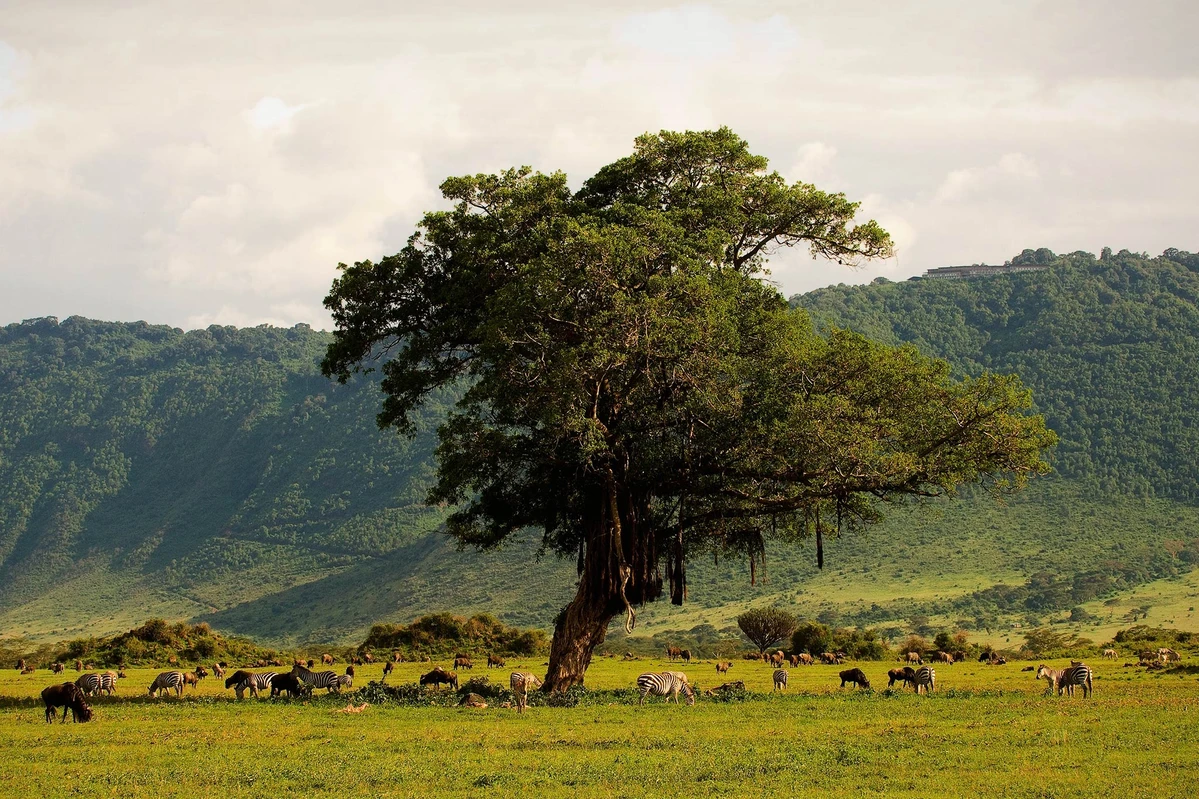
Destination
Ruaha National Park
Wander among ancient baobabs and along the Great Ruaha River in one of Tanzania's wildest, least-crowded parks, home to vast elephant herds, powerful lion prides, and rare kudu and sable antelope.
Destination Overview
Ruaha National Park covers about 20,226 square kilometers in south-central Tanzania, roughly 130 km west of the town of Iringa, in the Eastern Rift Valley. Established in 1964 and expanded to its current size in 2008 with the addition of the Usangu wetlands, Ruaha takes its name from "Ruvaha," the Hehe word for river — a fitting name for a park built around the Great Ruaha River and threaded by smaller sand rivers like the Mwagusi, Mdonya, and Jongomero. Its landscape is among the most striking on Tanzania's southern circuit, rising from riverine valleys studded with centuries-old baobab trees into rocky escarpments and the Isunkaviola Plateau.
Ruaha sits at a natural convergence point between East African and Southern African wildlife, giving it species rarely found elsewhere in Tanzania, including greater and lesser kudu alongside sable and roan antelope, on top of strong populations of elephant, lion, leopard, and buffalo — though black rhino are absent, so it isn't a true Big Five park. Ruaha also holds one of Africa's most significant remaining populations of African wild dog and, unlike the core areas of Tanzania's northern circuit, permits walking safaris and night game drives for a more immersive experience. Most visitors stay three to four nights, with the dry season from June to October offering the best game viewing; Ruaha is reached by scheduled flights from Dar es Salaam, Zanzibar, or Arusha, and pairs naturally with Nyerere National Park as part of a wider southern circuit safari.
The Great Ruaha River — the Park's Lifeblood and Its Name
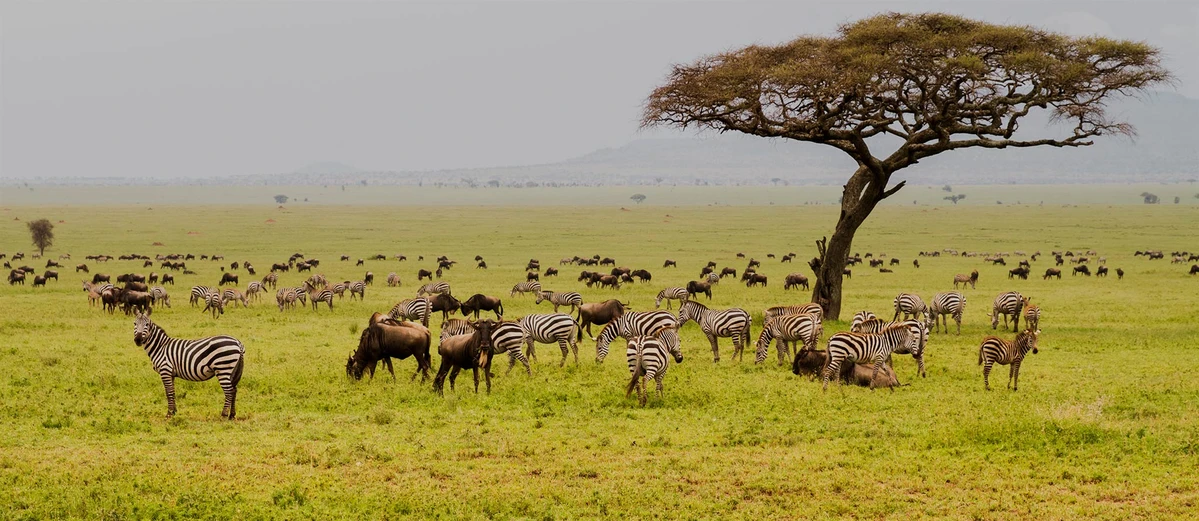
Ruaha takes its name from "Ruvaha," the Hehe word for river, and the Great Ruaha River remains the park's defining feature, drawing wildlife to its banks and shrinking pools through the long dry season. Following its course by vehicle or on foot delivers some of the most reliable and dramatic game viewing anywhere on the southern circuit.
Elephants Digging for Water in the Mwagusi Sand River
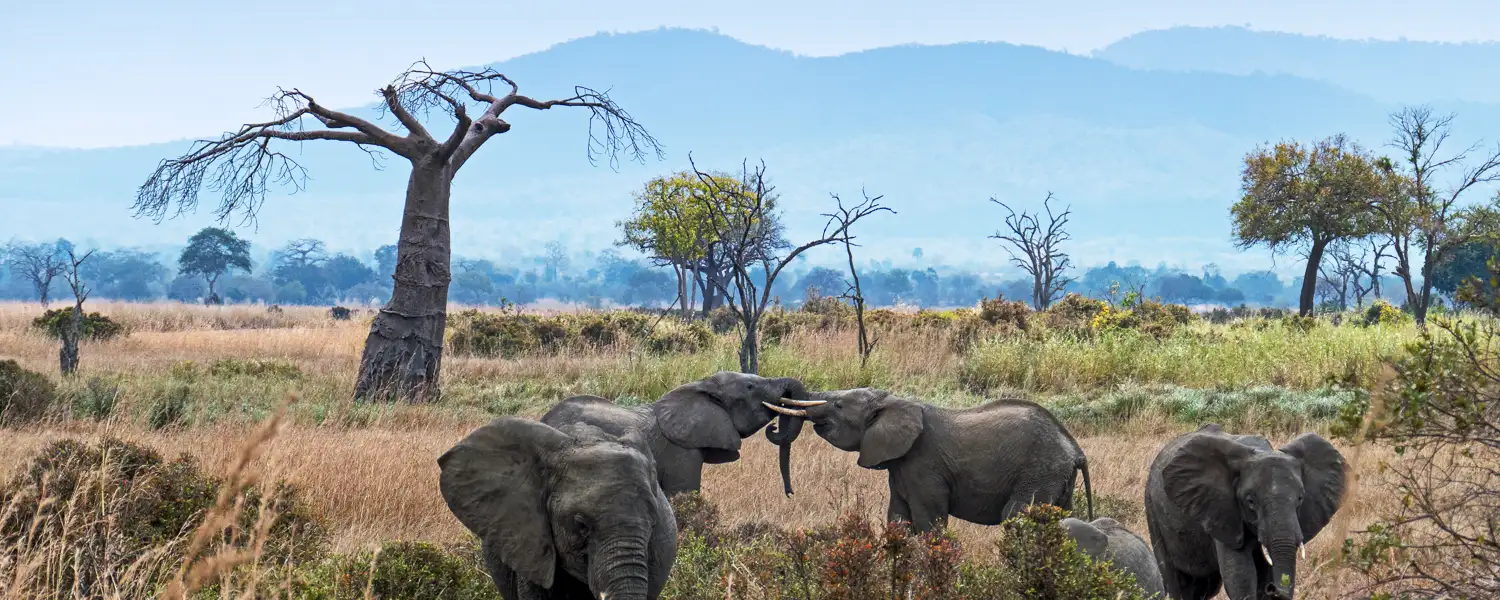
In the dry months, the Mwagusi Sand River appears to run dry on the surface, yet elephants know better — using their trunks and feet to dig down and reach the water still flowing beneath the sand. It's one of Ruaha's most memorable, only-in-the-dry-season sights, and a favorite spot for camps set along its banks.
Ancient, Storied Baobabs
Ruaha's rocky hillsides are studded with baobab trees estimated by some accounts at 500 to 1,000 years old, several still bearing wooden pegs hammered in generations ago by local honey-gatherers climbing to reach wild hives. These giant, silhouette-perfect trees are as much a symbol of Ruaha as its wildlife, especially at sunrise and sunset.
Rugged Escarpments and the Isunkaviola Plateau
Ruaha's terrain rises from river valleys into rocky escarpments and the Isunkaviola Plateau, reaching close to 1,868 meters in the park's higher ground. That range in elevation gives Ruaha a more varied, sculpted landscape than the flatter plains found elsewhere on the safari circuit, with sweeping views over the valley below.
A Network of Named Rivers Beyond the Ruaha
Alongside the Great Ruaha itself, the park is threaded by the Mwagusi, Mdonya, Jongomero, and Mzombe rivers, each supporting its own pocket of riverine habitat and its own cluster of camps. Exploring beyond the main river corridor rewards visitors with quieter, less-visited game-viewing areas within the park.
One of Tanzania's Largest Lion Populations
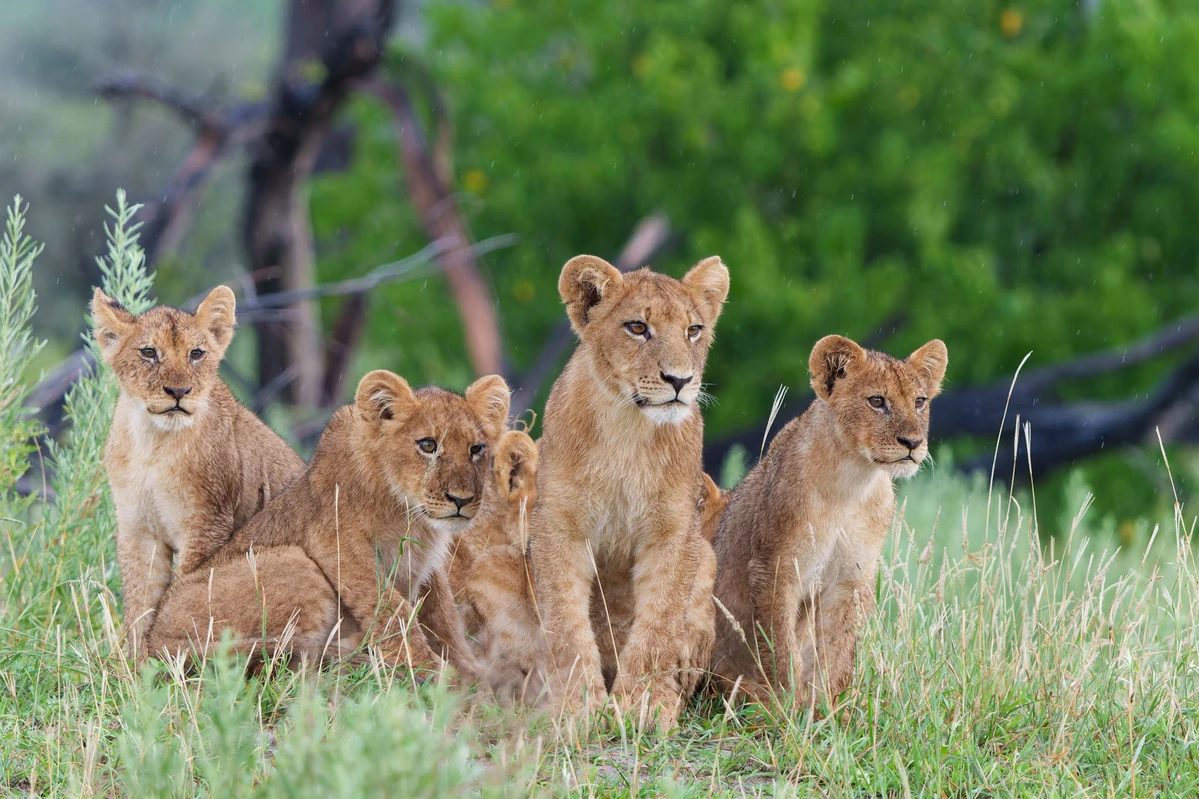
Ruaha holds one of the country's most significant lion populations, studied for years by the Ruaha Carnivore Project, which tracks prides across the wider landscape and works to reduce conflict between predators and neighboring communities. Large, well-established prides make lion sightings a consistent highlight of a Ruaha safari.
A Stronghold for African Wild Dog
The wider Ruaha ecosystem is recognized as one of Africa's most important remaining strongholds for the endangered African wild dog, with denning season from June to August offering some of the best chances to spot packs near their dens. For wildlife enthusiasts, wild dog sightings here are a realistic highlight rather than a rare stroke of luck.
Rare Antelope at a Wildlife Crossroads
Ruaha sits at a natural convergence point between East African and Southern African flora and fauna, which is why it's one of the few parks in Tanzania where you can find both greater and lesser kudu alongside sable and roan antelope. That biogeographic overlap gives Ruaha a species list that looks noticeably different from the northern circuit's.
Outstanding, Varied Birdlife
With more than 570 recorded species, Ruaha is a serious birding destination, home to the Ruaha red-billed hornbill and a strong cast of raptors, including martial eagle, bateleur, African fish eagle, and six vulture species, alongside kingfishers, bee-eaters, and lilac-breasted rollers along the rivers.
Remote, Uncrowded Wilderness
Ruaha remains one of Tanzania's least-visited major parks relative to its size, meaning game drives, walking safaris, and night drives here often unfold without another vehicle in sight. For travelers who want the drama of a big safari destination without the crowds, that sense of space and solitude is one of Ruaha's quiet, defining strengths.
Activities in Ruaha National Park
- Game Drives
- Walking Safaris
- Night Game Drives
- Birdwatching
- River-Based Game Viewing
- Balloon Safaris
- Photographic Safaris
- Cultural Visits
- Fly Camping
- Stargazing
Year-Round Weather in Ruaha National Park
The rains arrive from November and continue in some form through to April or May, with rainfall generally falling as afternoon or evening thunderstorms rather than sustained all-day downpours. December and January tend to bring the heaviest rainfall of the season, alongside warm daytime temperatures around 28-32°C (82-90°F) and milder nights near 16-20°C (61-68°F) — the warmest stretch of the year. Rather than a clear short dry break in January and February, Ruaha's wet season tends to run fairly continuously through these months, so travelers shouldn't expect a reliable lull in the rain during this window.
The rains persist into March and April, and many remote camps close from around mid-March through May or early June, when the heaviest downpours can make roads and airstrips difficult to use. By June, the skies clear again, rainfall drops away almost entirely, and Ruaha settles back into its long, dry, and most popular safari season.
Want to see more? This video is worth watching
Related Trips
Discover Tanzania
Your questions answered
Where is Ruaha National Park?
Ruaha National Park sits in south-central Tanzania, in the Eastern Rift Valley about 130 km west of the town of Iringa, on Tanzania's southern safari circuit. It's centered on the Great Ruaha River, which forms the park's main wildlife lifeline through the dry season.
In relation to Tanzania's other well-known destinations, Ruaha is roughly 600-650 km, or about a 10-hour drive, southwest of Dar es Salaam, the country's main international gateway — most travelers fly this leg instead. It sits several hours by road beyond Mikumi National Park, making Mikumi a natural stopover on the way in, and pairs most closely with Nyerere National Park and Udzungwa Mountains National Park as part of the same southern circuit. Zanzibar is reached separately via Dar es Salaam, typically as a short onward flight or ferry. Ruaha is geographically distinct from the northern circuit parks — Serengeti, Ngorongoro, Arusha National Park, and Mount Kilimanjaro — which lie far to the north, so combining the two circuits usually means a dedicated internal flight rather than a single overland route.
How big is Ruaha National Park, and is it Tanzania's largest?
Ruaha covers about 20,226 square kilometers, having grown to this size in 2008 when the Usangu wetlands were incorporated. It was Tanzania's largest national park for over a decade, though Nyerere National Park has since surpassed it in size following its own expansion in 2019 — Ruaha remains one of the country's largest and wildest protected areas.
How do I get to Ruaha National Park?
Most travelers fly from Dar es Salaam, Zanzibar, or Arusha on scheduled or charter flights into one of the park's airstrips, most commonly Msembe near the park headquarters. It's also reachable by road from Dar es Salaam via Mikumi, though the drive takes roughly ten hours and covers some unpaved sections, so most visitors choose to fly.
Is Ruaha a Big Five destination?
Ruaha offers strong sightings of lions, elephants, leopards, and buffalo, but black rhinos are absent from the park, so it isn't a true Big Five destination. What Ruaha lacks in rhinos, it makes up for with one of Tanzania's largest lion populations and consistently excellent elephant viewing.
Can I do walking safaris and night game drives at Ruaha?
Yes — both are permitted and popular at Ruaha, unlike the core areas of northern circuit parks such as Serengeti. Guided walking safaris get you closer to the details of the bush, while night drives with spotlights reveal nocturnal predators and smaller creatures rarely seen on daytime game drives.
What is Ruaha National Park known for?
Ruaha is known for its rugged, baobab-studded scenery along the Great Ruaha River, its large and well-studied lion population, and its position at a natural crossover between southern and eastern African wildlife zones — home to both greater and lesser kudu, plus sable and roan antelope rarely seen elsewhere in Tanzania.
Is there ongoing wildlife research at Ruaha?
Yes — the Ruaha Carnivore Project, run by the conservation group Lion Landscapes, has studied lions, cheetahs, and African wild dogs in the wider Ruaha-Rungwa landscape for years, with a strong focus on reducing conflict between predators and neighboring communities.
When is the best time to visit Ruaha National Park?
The dry season from June to October offers the best game viewing, as wildlife concentrates along the Great Ruaha River while the surrounding bush thins out. The wetter months from November to April bring lush green scenery and strong birdlife, though the tail end of the rains around March to May can make some roads difficult and prompt a few camps to close.
How long should I plan to stay at Ruaha?
Three to four nights is typical for a standalone Ruaha safari, giving enough time for game drives plus a walking safari or night drive. Many travelers extend this into a longer southern circuit itinerary, often combining Ruaha with Nyerere National Park for a week or more.
Where can I stay in Ruaha National Park?
Ruaha has accommodation across every comfort level, from simple bandas and campsites to comfortable mid-range tented camps and high-end luxury lodges along the river. We match you with a property suited to your comfort level, budget, and preferred activities.
What wildlife and birds can I expect to see at Ruaha?
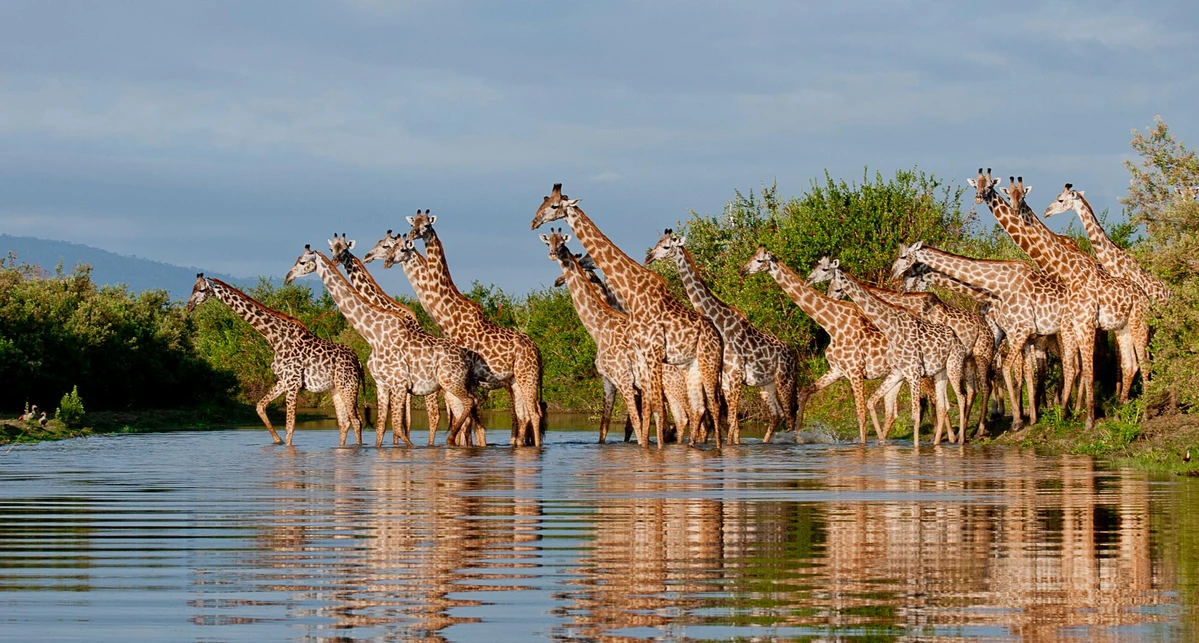
Expect elephant, lion, buffalo, giraffe, hippo, and greater and lesser kudu as reliable sightings, along with cheetah, African wild dog, and spotted hyena for those hoping to see Africa's rarer predators. Birders are especially well rewarded, with more than 570 recorded species across the park's river, woodland, and baobab-studded habitats.
Can I combine Ruaha with other parks or Zanzibar, and are there fees?
Yes — Ruaha pairs most naturally with Nyerere National Park as a classic southern circuit combination, and it can also be extended with Mikumi or Udzungwa Mountains National Park, or paired with a Zanzibar beach extension. Like all Tanzania National Parks Authority parks, Ruaha charges entrance and activity fees, which we build directly into your itinerary quote.