
Destination
Mikumi National Park
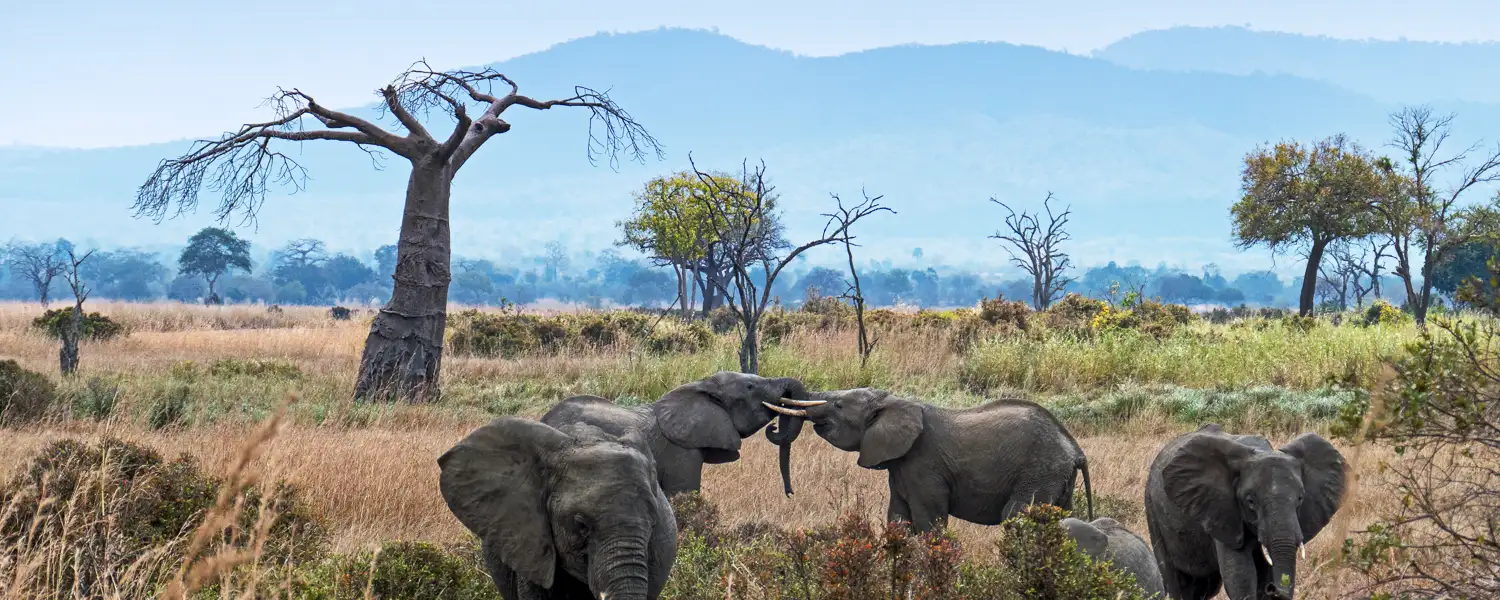
Known as Tanzania's "mini-Serengeti," Mikumi National Park delivers big-game safari sightings — lion, elephant, giraffe, and buffalo — across the open grasslands of the Mkata floodplain, framed by the dramatic backdrop of the Uluguru and Rubeho Mountains.
Destination Overview
Mikumi National Park covers about 3,230 square kilometers in Tanzania's Morogoro Region, making it the fourth-largest national park in the country. Established in 1964 and centered on the wide-open Mkata Floodplain, Mikumi has earned a lasting reputation as Tanzania's "mini-Serengeti" — a savanna landscape of acacia, baobab, and tamarind trees where the long, unbroken sightlines echo the country's most famous park on a smaller, easier-to-explore scale. A stretch of the Tanzania–Zambia Highway runs directly through Mikumi, splitting it into two sections, while the Uluguru and Rubeho Mountains rise along its edges, and Malundwe Mountain, the park's highest point at roughly 1,290 meters, adds further texture to the scenery.
Wildlife across the Mkata Floodplain includes elephant, Maasai giraffe, zebra, wildebeest, and Cape buffalo in reliable numbers, with lion and leopard present but seen with a bit more patience than on the northern circuit, and rhino absent from the park altogether. Two hippo pools near the main gate, over 400 recorded bird species, and woodland specialists like greater kudu and sable antelope in the surrounding hills round out the wildlife draw, while Mikumi's unfenced southern border with Nyerere National Park links it into a far larger conservation landscape. Most visitors spend two nights here, with the dry season from June to October offering the strongest game viewing; Mikumi's road access is straightforward year-round, and a fly-in option can also connect it with the northern circuit or Zanzibar for travelers building a wider Tanzania itinerary.

The Mkata Floodplain — Tanzania's "Mini-Serengeti"
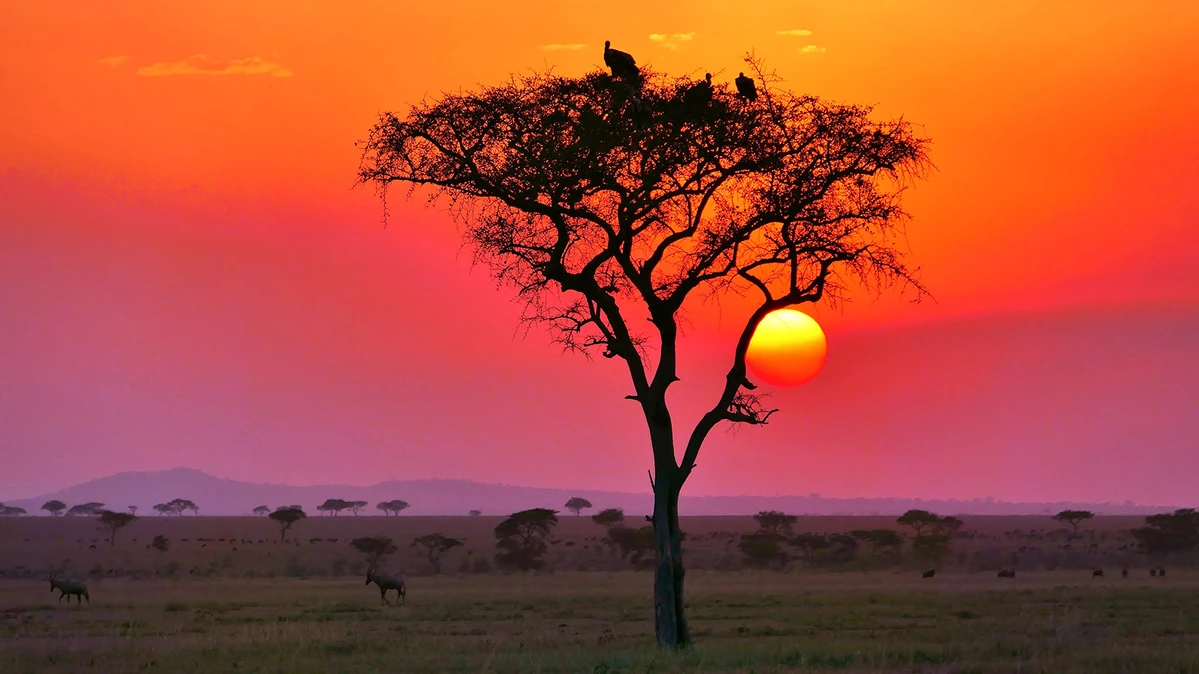
Mikumi's centerpiece is the wide-open Mkata Floodplain in the park's northwest, a stretch of savanna grassland studded with acacia, baobab, and tamarind trees and drained by the Mkata River. The long sightlines and concentration of plains game here draw an obvious comparison to the Serengeti, which is exactly why Mikumi has earned its enduring "mini-Serengeti" nickname — big skies, open horizons, and animals visible from a long way off.
Reliable Plains Game in Big Numbers
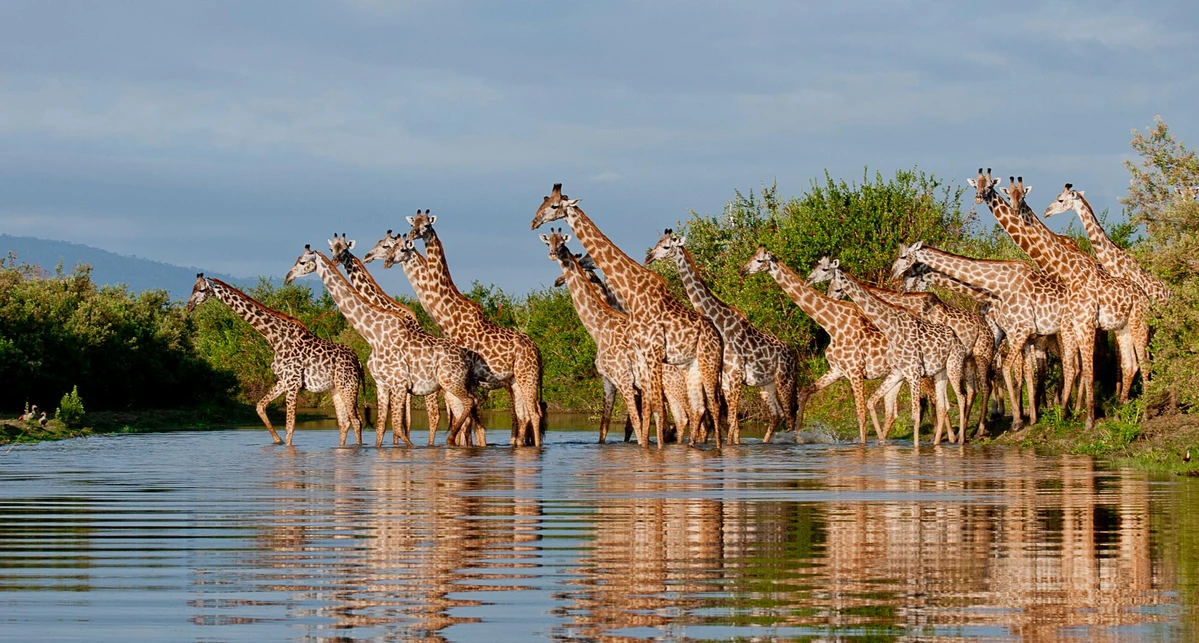
Across the floodplain, elephant, Maasai giraffe, zebra, wildebeest, and Cape buffalo gather in numbers that make for genuinely rewarding game drives without the crowds of the northern circuit. These sightings are consistent enough that first-time safari-goers and repeat visitors alike come away with a strong sense of having seen "classic" East African savanna wildlife in an unhurried setting.
Lion and Leopard, With a Bit of Patience
Mikumi is home to both lion and leopard, though sightings take more patience here than on the northern circuit's more heavily tracked prides — part of what keeps this park feeling wild rather than staged. Guides who know the terrain give you the best odds, watching favored resting spots in the shade of acacia stands scattered across the plains.
Two Hippo Pools Close to the Gate
A short detour from the main gate brings you to Mikumi's two hippo pools, an easy and popular stop where pods wallow, spar, and surface in full view. It's one of the park's signature quick highlights — close, reliable wildlife viewing that fits neatly at the start or end of a game drive.
Woodland Specialists: Kudu, Sable and Hartebeest
Beyond the open plains, Mikumi's miombo-woodland hills hold species you won't find on the floodplain itself — greater kudu, sable antelope, and Lichtenstein's hartebeest among them. For travelers who've already ticked off the classic plains species elsewhere in Tanzania, this habitat variety gives Mikumi a genuinely different wildlife-watching angle.
Over 400 Bird Species
Mikumi's mix of floodplain, woodland, and hippo-pool wetland habitat supports more than 400 recorded bird species, making it a rewarding stop for birders as well as game-viewers. Look for the yellow-throated longclaw, bateleur, African fish eagle, African spoonbill, hamerkop, southern ground hornbill, malachite kingfisher, northern carmine bee-eater, and purple-crested turaco, with Palearctic migrants adding to the variety between November and April.
A Backdrop of Mountains
Mikumi's scenery is more than just flat plains — Malundwe Mountain rises within the park to roughly 1,290 meters, its highest point, while the neighboring Udzungwa Mountains add a dramatic, forested edge to views from the floodplain. It's a landscape that shifts from open grassland to rugged high ground within a single game drive.
Bisected by a Historic Highway
One of Mikumi's more unusual features is the Tanzania–Zambia Highway (TANZAM), which runs directly through the park, splitting it into two distinct sections. Rather than detracting from the experience, it's become part of Mikumi's character — elephant and other wildlife are regularly seen close to the roadside, and our guides know exactly where each side of the highway delivers the best sightings.
Part of a Larger Wilderness
Mikumi shares an unfenced southern border with Nyerere National Park (formerly Selous Game Reserve), Tanzania's largest protected area, linking the two into one broader stretch of connected wilderness within the wider southern conservation landscape. Visiting Mikumi means you're seeing one corner of a much larger ecosystem, even though the two parks are explored separately.
Tanzania's Most Accessible Major Park
Mikumi sits just three to five hours by road from Dar es Salaam, making it by far the easiest major national park to reach from the coast — no light aircraft or long transfer required, though a fly-in option is also available for linking Mikumi with the northern circuit or Zanzibar. That accessibility, combined with walking safaris offered in designated areas, makes Mikumi a natural fit for a short safari, a weekend add-on, or the first stop on a longer southern circuit journey.
Activities in Mikumi National Park
- Game drives
- Walking safaris
- Bird watching
- Hippo Pools visit
- Photographic safaris
- Picnicking
- Camping
- Cultural visits
- Scenic drives
- Day trips from Dar es Salaam or Morogoro or Zanzibar
Year-Round Weather in Mikumi National Park
The short rains typically arrive in November, building through December, with rainfall increasing steadily but usually falling as brief afternoon thunderstorms rather than sustained downpours. Daytime temperatures stay warm through this period, generally 30-31°C (86-88°F), with humidity rising alongside the rain. Unlike Tanzania's northern circuit parks, Mikumi doesn't get a reliable short dry spell in January and February — the wet pattern that begins in November largely continues through these months, so travelers shouldn't expect a meaningful lull in rainfall here the way they might further north.
The long rains peak from March through May, with April as the wettest month of the year and March close behind, bringing heavier, more sustained rainfall, higher humidity, and muddier roads that can affect game drive access in places. Daytime temperatures during this stretch run around 27-30°C (81-86°F) with warm, humid nights near 20-21°C (68-70°F). Rainfall tapers off through May as the park transitions back toward the dry season, and by June the skies clear again, marking the start of Mikumi's most reliable stretch of safari weather.
Want to see more? This video is worth watching
Related Trips

Discover Tanzania
Your questions answered
Where is Mikumi National Park?
Mikumi National Park sits in Tanzania's Morogoro Region, on the southern safari circuit, centered on the open Mkata floodplain and bordered by the Uluguru and Rubeho Mountains to the northwest. It's one of the more accessible parks on this side of the country, with good road access year-round.
How big is Mikumi National Park?
Mikumi covers about 3,230 square kilometers, making it the fourth-largest national park in Tanzania. It was established in 1964 and has grown into one of the anchor parks of the southern circuit.
What is Mikumi National Park known for?
Mikumi is often called Tanzania's "mini-Serengeti" for its wide-open Mkata floodplain, where elephant, giraffe, zebra, wildebeest, and buffalo gather across grassland that closely resembles the famous northern plains. It's known for reliably good game viewing packed into a compact, easy-to-explore park.
Is Mikumi connected to Nyerere National Park or the former Selous?
Yes — Mikumi shares an unfenced southern boundary with Nyerere National Park (formerly Selous Game Reserve), Tanzania's largest protected area, so the two form part of a single continuous wildlife ecosystem even though they're managed and visited separately.
Is Mikumi a Big Five destination?
Mikumi offers four of the Big Five — lion, elephant, buffalo, and leopard — with rhino absent from the park. Lion and leopard sightings take a bit more patience than at Serengeti or Ngorongoro, but elephant, buffalo, giraffe, and zebra are seen reliably on most game drives.
Is there a road that runs through the park?
Yes — a major highway crosses through Mikumi, splitting it into two sections with slightly different landscapes and wildlife concentrations. It's a normal feature of the park rather than a drawback, and our guides know exactly where game viewing is strongest on either side.
Can I see hippos at Mikumi?
Yes — Mikumi has dedicated hippo pools that are a popular stop on game drives, giving good, close viewing of pods wallowing and interacting, alongside the usual plains game found across the Mkata floodplain.
When is the best time to visit Mikumi National Park?
The dry season from June to October offers the best game viewing, as thinner vegetation and animals concentrating around water make sightings easier. The park remains rewarding outside these months too, with the wetter season bringing lush scenery and strong birdlife.
How long should I plan to stay at Mikumi?
Two nights is typically enough to cover the main game-viewing areas and the hippo pools with a couple of good game drives, though Mikumi also works well as a shorter stop when combined with other southern circuit parks like Udzungwa Mountains or Nyerere.
What wildlife and birds can I expect to see at Mikumi?
Expect elephant, giraffe, zebra, wildebeest, buffalo, and hippo as the most reliable sightings, with lion, leopard, and eland present in smaller numbers. Birders can look forward to more than 400 recorded species across the floodplain, woodland, and mountain-edge habitats.
Where can I stay at Mikumi National Park?
Mikumi has a good range of accommodation for a southern circuit park, from budget campsites to comfortable mid-range and upmarket lodges, most positioned close to the main game-viewing areas around the Mkata floodplain. We match you with a property suited to your comfort level and budget.
Can I combine Mikumi with other parks, and are there fees?
Yes — Mikumi pairs naturally with Udzungwa Mountains National Park for forest hiking and primates, or with Nyerere National Park for a deeper southern circuit safari. Mikumi also has its own small airstrip, so a fly-in option can link it by light aircraft to the northern circuit parks (Serengeti, Ngorongoro, Tarangire) or to Zanzibar, making it easy to combine a southern circuit stop with the rest of your Tanzania trip without long road transfers. Like all Tanzania National Parks Authority parks, Mikumi charges entrance and activity fees, which we build directly into your itinerary quote.